Figures
Oscillograms, traces and photographs held against this taxon.
What the sources say about this taxon, as written.
behaviour · bio.acousti.ca
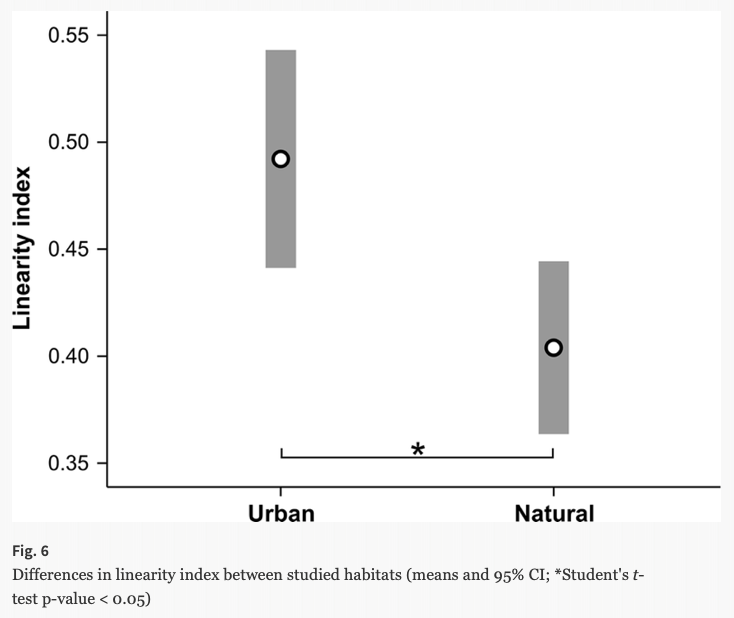
Song thrushes belong to a group of bird species possessing complex songs and a large repertoire [54], with a characteristic, species-specific repetition of certain syllables during song production. Such syllables can be roughly categorized into two distinct types: low-frequency loud whistles and wide-band soft twitters (Fig. 1). Based on knowledge from other species it can be expected that acoustically different syllable types are used to address various receivers and/or receivers within distinct ranges [23, 55]. Both types of syllables resemble those in the repertoire of the closely related common blackbird Turdus merula, whose song has been studied more intensively [i.e., 55, 56, 57]. Therefore, it is possible that the functions of whistle and twitter syllables are similar for both species, but this needs further testing. Loud and simple whistle syllables are adapted to long-range communication and can be heard far beyond male territory borders. On the other hand, twitter syllables are greatly limited by vegetation [4, 58] and seem to be better suited for short-range communication. Whistles and twitters are both repeated in sequences, increasing the redundancy of the song and therefore making it more detectable [5]. Syllable frequency The song of urban males was characterized by a higher frequency of whistle syllables when compared to nonurban males (Table 1, Fig. 3). The best fitting GLM (ΔAICC < 2) included three possible model combinations for both variables (Table 2), where each model showed a significant effect of habitat type on the minimum and peak frequency of whistle syllables (Additional file 2: Table S4). Relationship between ambient noise level and whistle syllable frequency is shown in Additional file 1: Figure S2, Figure S3 and Additional file 2: Table S5. We found no significant differences in the twitter syllable minimum and peak frequency between the studied populations (Table 1). Repertoire size and use of whistle and twitter syllables Urban song thrushes had significantly larger overall syllable repertoires, as well as larger whistle and twitter repertoires, than their conspecifics from forest habitats (Fig. 4, Table 1). A positive correlation was found between syllable (r = 0.465, p < 0.001, n = 58; Additional file 1: Figure S4), whistle (r = 0.400, p = 0.002, n = 58; Additional file 1: Figure S5) and twitter (r = 0.393, p = 0.002, n = 58; Additional file 1: Figure S6) repertoires and the ambient noise level. Relationship between repertoire characteristics and ambient noise level is shown in Additional file 2: Table S5. Males produced significantly more twitters in urban populations (Fig. 5, Table 1). The best fitting GLM (ΔAICC < 2) for syllable repertoire and whistle repertoire included five possible model combinations for both syllable and whistle repertoire (Table 2), showing a significant effect of ambient noise level on both variables (Additional file 2: Table S4). A significant effect of ambient noise level, as well as the day in the season, was shown by the two best fitting GLMs. Here, the twitter repertoire decreased as the season advanced (Table 2, Additional file 2: Table S4). There were five best fitting GLMs that were shown for twitter fraction, with a significant effect of ambient noise level, day in season and habitat type for this variable (Table 2, Additional file 2: Table S4; Additional file 1: Figure S7). Estimates of ambient noise level revealed that syllable, whistle and twitter repertoires, as well as twitter fraction, were significantly higher in urban males (Additional file 2: Table S4). Temporal song organization Males were shown to slowly decrease syllable production rate with seasonal progression (r = − 0.268, p = 0.042, n = 58). The redundancy and linearity indices describe different aspects of a songs temporal organization and were not significantly correlated (r = 0.200, p = 0.130, n = 58). The redundancy index did not differ significantly between urban and nonurban forest habitats (Table 1). However, the linearity index varied significantly between studied populations and was higher for urban males (Fig. 6, Table 1). The best fitting GLM (ΔAICC < 2) included four possible model combinations, each showing a significant effect of ambient noise level on the linearity index (Additional file 1: Figure S8; Additional file 2: Table S4). As predicted, song thrushes repeated syllable types more often before switching to another type while singing in noisy urban habitats (Additional file 2: Table S4). The linearity index was also highly correlated with repertoire size (r = 0.969, p < 0.001, n = 58) and twitter/whistle ratio (r = − 0.553, p < 0.001, n = 58). Therefore, in urban habitats, song thrushes repeated syllable sequences more often whilst increasing the proportion of twitter elements in their songs.
5 measurements across 1 traits. Each name links to its term in the audioBlast vocabulary.
Every value behind the summaries above. Each links to its own record in the API, which carries the reference it was taken from.
Oscillograms, traces and photographs held against this taxon.
Counts are recordings at or below each taxon, so an empty branch shows as empty before you click it. A dash means the join view holds no column for that rank and cannot roll up to it.
Publications audioBlast links to this taxon.
The rows audioBlast holds for this taxon, each matched to the same Catalogue of Life node. Where a source classifies it differently, its own classification is kept.
| Source | Its name | Its rank | Its family | Record |
|---|---|---|---|---|
| bio.acousti.ca | Turdus philomelos | Species | Turdidae | bio.acousti.ca/7034 |
Bioschemas is in the head of this page. The Darwin Core RDF lives at the API address below, which negotiates JSON-LD and Turtle.
{
  "@context": [
    "https://schema.org/",
    {
      "dwc": "http://rs.tdwg.org/dwc/terms/"
    }
  ],
  "@type": "Taxon",
  "@id": "https://browse.acousti.cloud/taxon/turdus-philomelos/",
  "name": "Turdus philomelos",
  "taxonRank": "species",
  "url": "https://browse.acousti.cloud/taxon/turdus-philomelos/",
  "sameAs": "https://api.audioblast.org/taxon/CoL/59PMR",
  "alternateName": [
    "Song thrush"
  ],
  "parentTaxon": {
    "@type": "Taxon",
    "name": "Turdus",
    "taxonRank": "genus",
    "url": "https://browse.acousti.cloud/taxon/turdus/"
  }
}